

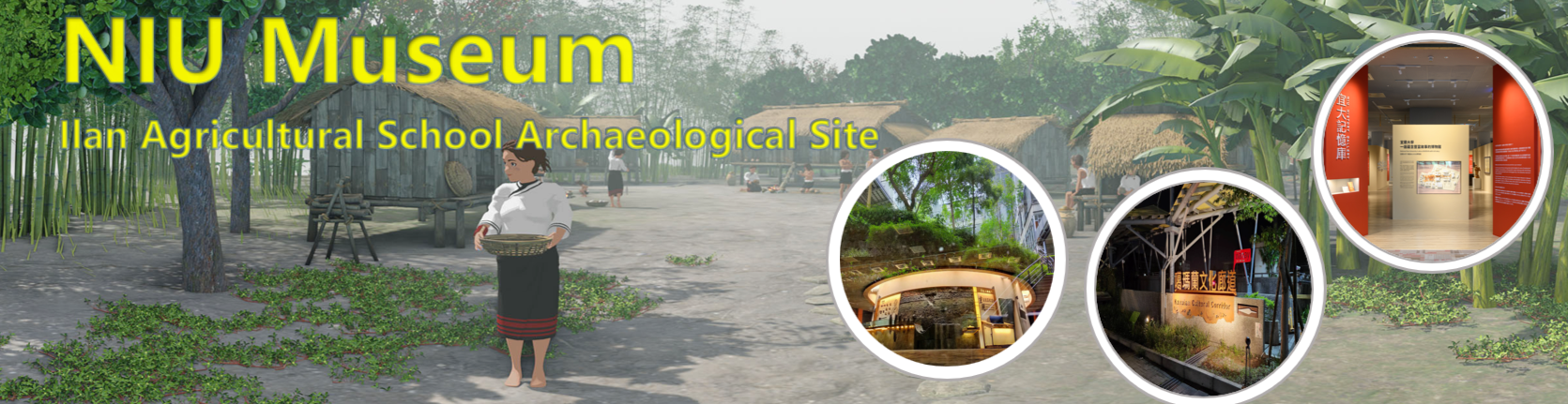


穿越400年宜蘭農校遺址重現-Four Centuries, from Village to Campus
緣起 Background
國立宜蘭大學(以下簡稱本校)的前身是日治時期「臺北州立宜蘭農林學校」。學校的所在地其實是一處十三行文化舊社類型的考古遺址,年代距今約400年前後,沿襲學校舊名而列冊稱作「宜蘭農校遺址」。根據遺址的地質生土層研究顯示,大約在西元3世紀到15世紀,大約1000餘年的時間裡,曾發生過多次不同程度的洪水氾濫,該遺址極可能是口傳認知與歷史記載的「擺厘舊社」。
National Ilan University, known as NIU or YiDa for short, was founded during Taiwan’s Japanese colonial period. The school opened as the Taihoku Prefectural Yilan Agricultural and Forestry School on an archaeological site associated with the traditional Shisanhang Culture of approximately four centuries earlier. The first name of the school still appears in the site’s officially registered designation: Yilan Agricultural School Archaeological Site. Geo-stratigraphic studies of the site indicate that between the 3rd and 15th centuries CE—over a span of roughly 1,000 years—the area experienced multiple episodes of flooding. The village that once existed at the site is highly likely to be the Baili Settlement, long described in Taiwan’s oral traditions and historical records.
A. 考古斷面牆及文物展示 Archaeological Profile
宜蘭農校遺址歷經不同時期的擾動,地層顯示更為複雜。從這個地層堆積中可見四個主要地層:L1 表土層、L2 堆積土層、L3 文化層、L4 生土層,各個土層斷面代表不同的生活文化時期,從斷面的泥土顏色(灰色、淡黃灰色、暗橄欖灰色)、夾層殘留文物(木、石頭、陶片等)可觀察其遺址年代、文化內涵、生活民情等。 運用門廳牆體立面等比例完整呈現 NH-P9-P10 探坑之東牆的地層斷面,並仿製呈現其土層土壤顏色、材質、文物,民眾可以一覽。考古斷面牆上也選擇四個適當的位置,設置互動式翻翻板,以有趣且富教育意義的問答方式,吸引民眾參與。
The Yilan Agricultural School Site has undergone disturbances across various periods, leaving a complex stratigraphy. Four main layers are identified: L1 Topsoil, L2 Depositional Layer, L3 Cultural Layer, and L4 Subsoil. Each represents different cultural periods, evident in soil colors (gray, light yellow-gray, dark olive-gray) and embedded remains such as wood, stone, and pottery sherds, which together reveal chronological sequence, cultural traits, and daily life practices. The east wall profile of excavation units NH-P9-P10 is replicated in full scale within the entrance hall. Soil color, texture, and artifact inclusions are faithfully reproduced, allowing visitors to explore the stratigraphy at a glance. Four interactive flip-panels are integrated into the profile wall, presenting educational Q&A content to engage the public.
日治時期至戰後的生活遺物和大量的建築材料遺留。土質多樣、文物以磚塊、瓦片最為常見,本層為地表層,擾動嚴重。
Contains everyday remains from the Japanese colonial to post-war era, including abundant construction debris such as bricks and tiles. The layer shows heavy disturbance.
自然堆積層其主要的土質為黏土,上層偏黃褐色土質厚實;下層土色偏灰較上層為薄。可見零星陶片、瓦片、玻璃珠等文物出土。
A natural accumulation primarily of clay. The upper part is thick and yellow-brown in color, while the lower part is thinner and gray. Scattered artifacts include pottery sherds, tiles, and glass beads.
是為舊社文化層,土色偏黑,出土文化及現象均多,包含幾何拍印紋陶、安平壺、硬陶、各式玻璃珠、貝類、植物種子等遺留,以及灰坑、墓葬、木柱群等現象,文化現象較為豐富。
The core settlement layer, characterized by dark soil and abundant cultural materials and features, such as impressed pottery, Anping jars, coarse ware, various glass beads, shells, plant seeds, ash pits, burials, and posthole groups, reflecting a rich cultural landscape.
上層土質為黏土含砂,土色為黃褐色,文物少,下層為砂土,土色偏橄欖灰,土質純淨無遺物。
The upper portion is clayey with sand inclusions, yellow-brown in color, containing few artifacts. The lower portion consists of clean gray-olive sand with no cultural remains.
B. M9 墓葬展示 M9 Burial Display
遺址共出土七具墓葬,埋葬方式大致呈現方形或橢圓形坑穴,以木條擺放墓底及墓室四周,配戴裝飾品及擺上木質葬具及陪葬陶器。在第二柱群中有M8、M9、M10的墓葬出土,其中M9可能為20歲成年個體,陪葬品中以有完整度較佳的魚形銅編及五串琉璃管珠串最令人印象深刻。
本展區的墓葬展示以M9墓葬為對象,如實仿製翻模呈現其陪葬文物分布之位置,遺骸為屈身蹲姿,上層可見死者盛裝打扮,穿戴閃亮的手環、串珠、金珠項鍊、魚形銅編等,連同身上裝飾華麗的陪葬品一起包裹後下葬,胸前懷抱安平壺,下層則是經清理後僅見安平壺及琉璃珠等裝飾品。
Seven burials were unearthed at the site, typically rectangular or oval pits lined with wooden planks and containing ornaments, wooden coffins, and pottery grave goods. Among these, M9—believed to be a young adult of about 20 years—yielded particularly remarkable finds: a bronze fish-shaped ornament and five strings of glass tube beads.
The exhibit recreates the M9 burial, including its associated grave goods. The remains are shown in a flexed, crouched position. The individual was richly adorned with shining bracelets, bead strings, gold-bead necklaces, and the fish-shaped bronze ornament, with an Anping jar held at the chest. Lower layers show additional items such as glass beads and pottery, reflecting elaborate mortuary practices.
C. H14 水溝現象 H14 Water Channel Feature
整個遺址推測可能是水溝的現象僅一處,也就是位於第二柱群的H14。此一東西向的水溝,長450cm以上,寬超過169cm,深度最深達到93cm,位在發掘區域的中間位置,現象的北側為第二群柱與一個墓葬,南側有三個墓葬以及第三群柱。
從界牆可以觀察到水溝現象出現在文化層的底層,發掘時水溝形狀呈不規則,部份區域(約海拔340-330cm)出現含大量遺物之黏土含砂層。發掘至約海拔270cm近槽底面時,除了兩個直上層延續的東西向溝槽之外,還發現兩個直徑約50公分的圓坑。
Only one water channel feature has been identified on the site, designated H14, located in the second posthole cluster. It extends over 450 cm in length, more than 169 cm in width, and up to 93 cm in depth, running east–west through the central excavation area. To its north lay postholes and a burial, while to the south were three burials and another posthole cluster.
Stratigraphic evidence places the channel at the base of the cultural layer. Its irregular shape included clay-sand deposits rich in cultural materials around 340–330 cm elevation. At about 270 cm near the base, two east–west grooves continued from upper layers, alongside two circular pits about 50 cm in diameter.
D. 木群柱陣列 Wooden Post Alignment
選擇第二群柱中部份木柱呈現遺址場景,以兩列近乎平行的直立木柱為主,南北走向,西側柱列雖不完整,但可從與柱列位置一致的溝槽狀況,推測是為建屋一側的基礎。東側柱列以板柱為主,可能同時具備牆板功能,研判整列木柱是建屋另一側的柱基。整體看來可能代表較為完整的家屋,推測房屋柱基南北長420cm、東西180cm。
A portion of the second posthole cluster has been reconstructed, showing two near-parallel rows of upright posts aligned north–south. Though incomplete on the west side, grooves consistent with posthole placement suggest they formed part of a house foundation. The east side, composed mainly of plank posts, may have doubled as wall supports. Together, the alignment is interpreted as a house structure, with estimated dimensions of 420 cm (N–S) by 180 cm (E–W).
E. 風華再現 Cultural Revival – Recreated Artifacts
遺址出土仿製文物
以鋼版圖形鏤空雕刻方式,刻寫兩位噶瑪蘭族人當時的生活情境。男人將金屬線纏繞成如魚形狀配戴於胸前,搭配金箔片,走路搖動時有如魚鱗晃動、閃閃發光;耳朵則戴著大大的金屬環。女人則嘴裡叼著方斗形陶質煙斗,三面皆有刻畫紋,極為巧緻,從這些裝飾技巧足以想像當時的榮華情景。
其餘代表性的器皿、工具及飾品,以復刻方式呈現,概分為下列幾種:
Representative artifacts from the site have been recreated, alongside etched steel panels depicting scenes of Kavalan life. One male figure wears a fish-shaped bronze ornament wrapped in gold foil across his chest, shimmering like fish scales in motion, with large metal earrings. A female figure smokes from a square-based clay pipe intricately incised on three sides, showcasing remarkable craftsmanship.
Other reproduced categories include:
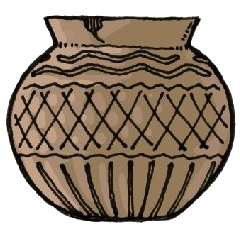
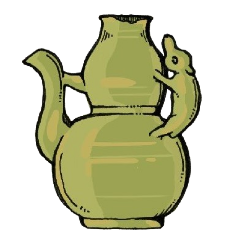
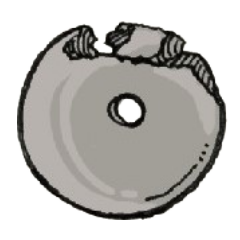
▸ 生活器具:幾何印紋陶罐、近代貿易陶瓷(安平壺、瓷器)、木質器物(木碗、木拍板、木鏟、卯釘狀器)、石質工具(石錘、石鋤、圓板)、其他(鐵箭頭、煙斗、石紡輪)
Domestic Tools: impressed pottery jars, Anping jars, trade ceramics, wooden bowls, paddles, spades, dowel-like implements, stone hammers, hoes, discs, iron arrowheads, clay pipes, and spindle whorls.
▸ 飾品:瑪瑙珠與玻璃管珠、金屬環、彎月形金箔片、魚形金屬編物。
Ornaments: agate and glass beads, metal rings, gold foil pieces, and fish-shaped bronze ornaments.